
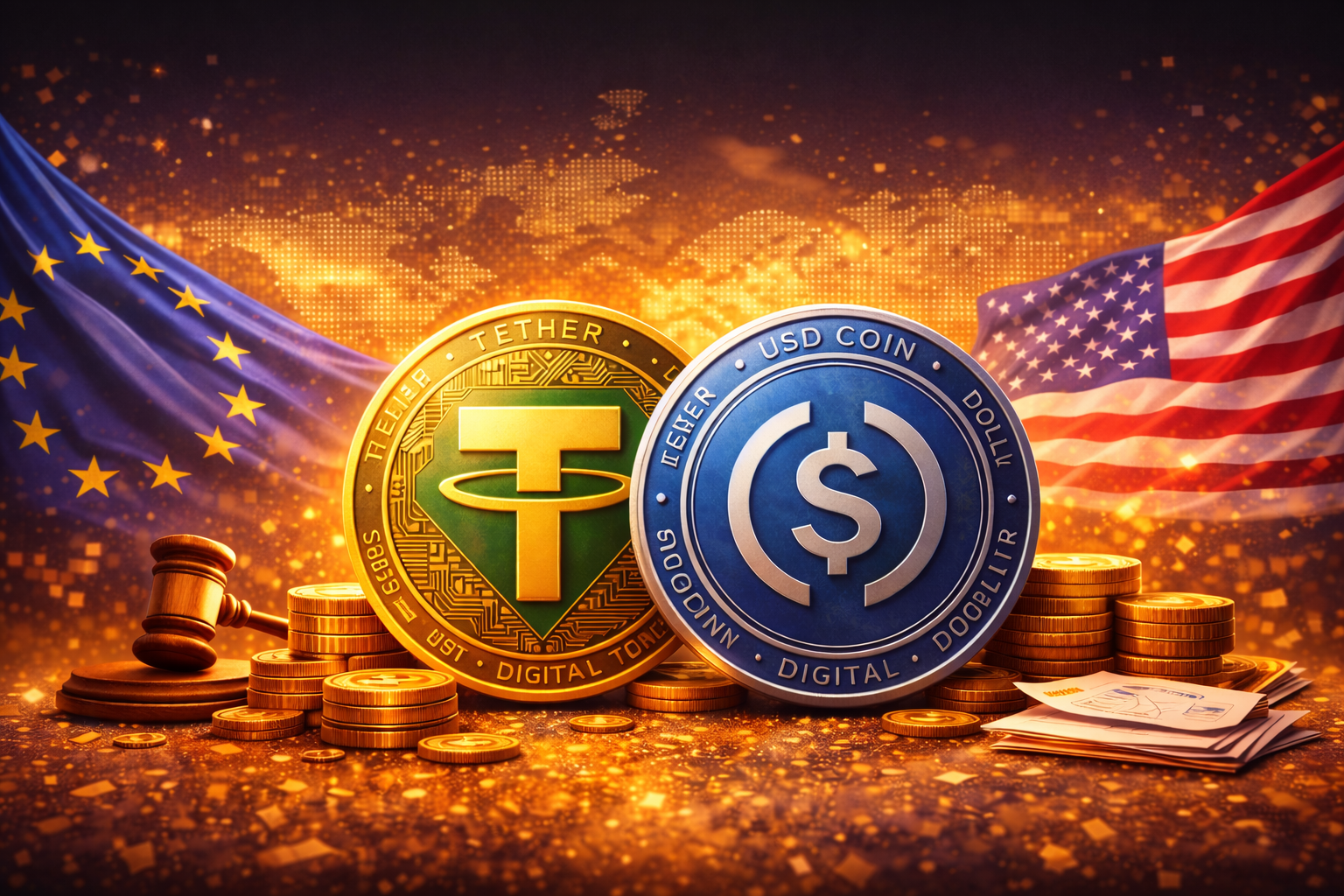
Stablecoin markets are entering a new phase of rapid expansion, driven by record market capitalization, clearer global regulation, and accelerating real-world use cases. What was once primarily a crypto trading tool is increasingly becoming core payment and financial infrastructure.
Stablecoin Market Growth Accelerates
The global stablecoin market has now surpassed $280 billion in total capitalization, with Tether USD and USD Coin continuing to dominate issuance and usage.
Key growth drivers include:
- Rising institutional participation
- Increased cross-border payment usage
- Strong demand across Asia, where stablecoins are widely used for settlement and liquidity management
Stablecoins now sit at the center of crypto market liquidity and increasingly intersect with traditional finance.
Regulatory Clarity Drives Confidence
Clearer regulation is emerging as a major tailwind rather than a constraint.
European Union: MiCA
The EU’s MiCA framework is now in force, introducing:
- Strict reserve quality requirements
- Clear redemption rules
- Limits on interest payments to consumers
These rules aim to improve transparency and consumer protection while enabling regulated growth.
United States: GENIUS Act
In the U.S., the proposed GENIUS Act sets the foundation for:
- 100% reserve backing
- Federal oversight of stablecoin issuers
- Enhanced AML and compliance standards
While full implementation is expected by 2027, markets are already pricing in greater regulatory certainty.
United Kingdom: Payments Integration Focus
UK regulators are taking a differentiated approach.
The Bank of England and Financial Conduct Authority are consulting on rules that separate:
- “Systemic” stablecoins used for payments
- Non-systemic stablecoins used mainly for crypto trading
This signals intent to integrate stablecoins directly into the payments system rather than restrict their use.
Mainstream and Institutional Adoption Expands
Stablecoins are increasingly being adopted by major financial and payments firms.
- Stripe has highlighted stablecoins as a key tool for faster, global settlement
- Banks and fintechs are exploring stablecoins for treasury management and internal transfers
- Financial institutions see them as a bridge between traditional payments and blockchain efficiency
This trend reinforces stablecoins’ shift from niche crypto assets to mainstream financial rails.
New Use Cases Beyond Trading
Stablecoin innovation is expanding beyond simple price stability.
- Yield-bearing models such as USDe are attracting attention
- Stablecoins are increasingly used in DeFi lending, payments, and treasury operations
- Institutional research, including analysis from UBS, highlights growing interest in yield-generating stable assets
Regional Adoption Trends
While Asia leads in transaction volume, adoption is accelerating across:
- Latin America
- Africa
- The Middle East
According to the International Monetary Fund, stablecoin usage in these regions is significant relative to GDP, driven by currency volatility and cross-border payment needs.
What’s Next for Stablecoins
Looking ahead into 2026, key themes include:
- Further regulatory clarity in the U.S. and UK
- Increased focus on reserve audits and transparency
- Deeper integration into global payment systems
Bottom Line
Stablecoins are no longer just crypto market tools—they are becoming regulated, trusted, and widely used financial infrastructure. With record market growth, advancing regulation, and expanding real-world adoption, stablecoins are positioned to play a central role in global digital finance in the years ahead.