
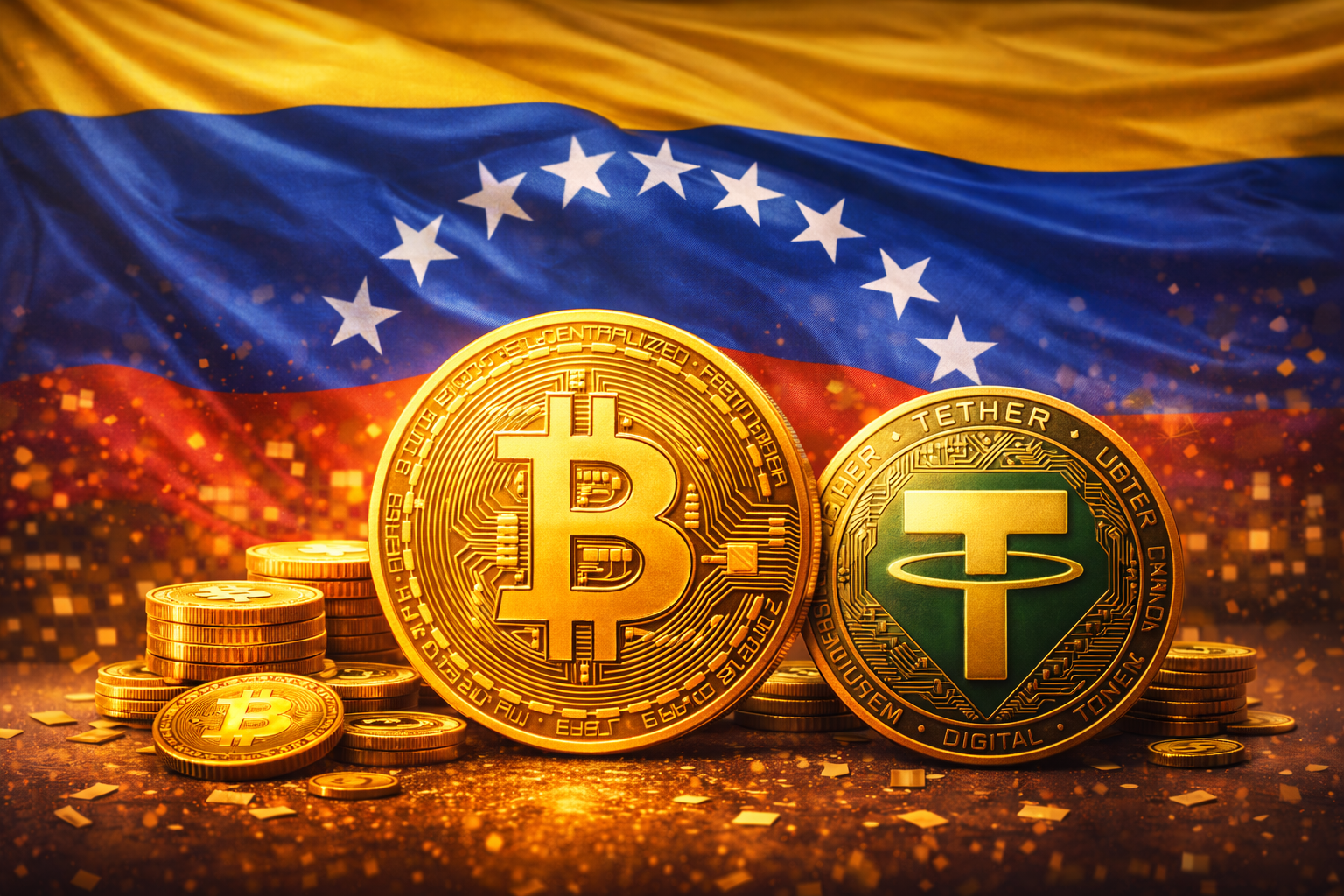
The capture and removal of Nicolás Maduro on January 3, 2026 marks a major geopolitical shift for Venezuela—and potentially a turning point for cryptocurrency adoption in the country. While the immediate reaction across global crypto markets was muted, the medium- to long-term implications for crypto usage inside Venezuela are significant.
Immediate Market Reaction: Calm Before Volatility
In the hours following the announcement, Bitcoin held steady, suggesting markets had largely priced in political instability. However, analysts expect increased volatility in the coming days as traditional markets—particularly oil—react to the possibility of higher Venezuelan production and a new political alignment.
Crypto markets are likely to follow, especially as macro correlations strengthen.
Why Crypto Matters So Much in Venezuela
Under the Maduro regime, crypto became essential to daily life:
- Tether (USDT) was widely used to bypass sanctions and hyperinflation
- By late 2025, an estimated ~10% of grocery transactions were conducted in crypto
- Civilian crypto adoption grew over 110% year-over-year (ending mid-2024)
- The bolívar’s collapse pushed citizens toward digital dollars and Bitcoin
Government attempts to impose a national digital currency—the petro—failed due to lack of trust and real utility.
What Changes After Maduro?
Increased Legitimacy for Decentralized Crypto
A post-Maduro, pro-Western government is expected to:
- Reverse crackdowns on Bitcoin mining
- Provide clearer, more consistent crypto regulation
- Legitimize the use of decentralized assets Venezuelans already rely on
This would shift crypto from a survival tool to a legitimate financial alternative.
Decline of State-Backed Crypto
Venezuela’s state-issued petro, which was discontinued in early 2024, is expected to become fully obsolete after the regime’s fall. With the petro already widely viewed as a failure, its disappearance removes a state-controlled alternative to decentralized cryptocurrencies and ends its use as a tool for avoiding sanctions.
Sanctions Relief Changes the Narrative
With U.S. sanctions likely to be lifted:
- The government-level need for crypto to evade sanctions declines
- Infrastructure (internet, payments, power) may improve
- Crypto use shifts from necessity to preference and protection
Even with stabilization, trust in fiat currency remains low, supporting continued civilian crypto adoption.
Bitcoin Mining and Long-Term Outlook
The current moratorium on large-scale Bitcoin mining is likely to be reassessed. A new framework could introduce:
- Transparent licensing
- Clear power usage rules
- Private-sector participation
This would replace the previous state-controlled model with a more sustainable approach.
Bottom Line
Maduro’s removal does not immediately move crypto markets—but it reshapes Venezuela’s crypto future. While sanctions relief may reduce extreme dependence on crypto, regulatory clarity and improved legitimacy could drive broader, more stable adoption.
For Venezuela, crypto may finally transition from an emergency lifeline to a normalized financial tool—used not just to survive instability, but to build resilience in a post-regime economy.