


The latest U.S. Initial Jobless Claims came in at 205,000, below expectations of 215,000, signaling a stronger-than-expected labor market.
At first glance, this may seem like a positive economic signal. But for crypto markets, the implications are more complex.
Why Jobless Claims Matter for Crypto
Jobless claims are one of the key indicators the Federal Reserve uses to assess the strength of the economy.
- Lower claims → stronger labor market
- Strong labor market → less urgency to cut rates
- Fewer rate cuts → tighter liquidity
In simple terms:
Strong economic data can be bearish for crypto in the short term if it leads to expectations of tighter monetary policy or delayed rate cuts.
Stronger job data can put pressure on crypto markets because it reduces the likelihood of interest rate cuts. When the Federal Reserve keeps rates higher for longer, liquidity stays tight, and risk assets like Bitcoin tend to struggle.
Current Market Reaction
As of now:
- Bitcoin is trading near $69,597, down ~0.6%
- Ethereum is near $2,154, down ~0.6%
- XRP is holding relatively strong with slight gains
At the same time:
Crypto ETF flows turned negative, with approximately $220 million in outflows
This combination suggests that markets are already reacting to tightening liquidity expectations.
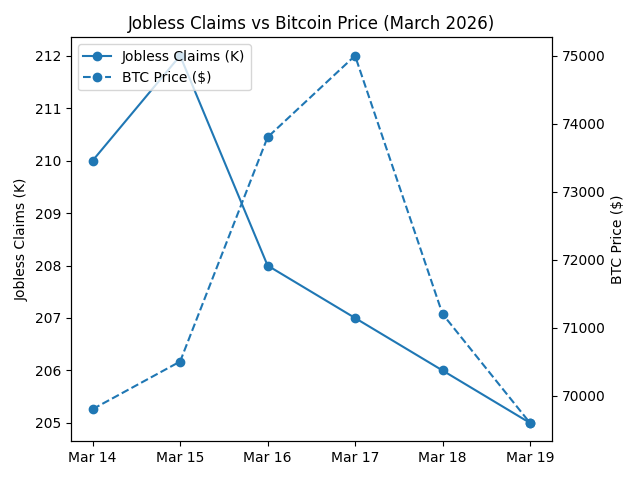
Figure 1 — Bitcoin reacting to macroeconomic data surprises such as jobless claims.
As shown in Figure 1, stronger-than-expected labor data often aligns with short-term downside pressure in Bitcoin due to tightening liquidity expectations.
The Real Driver: Liquidity Expectations
The key variable is not the data itself it’s what it means for liquidity.
Crypto markets are highly sensitive to global liquidity conditions.
When jobless claims come in lower:
- The Fed has less reason to cut rates
- Financial conditions remain tight
- Risk assets face pressure
For a deeper dive, check out our guide on Crypto liquidity and ETF flows.
ETF Flows Confirm Institutional Positioning
ETF flows provide a real-time view into how institutions are reacting.
The latest data shows:
👉 -$220 million in outflows
This suggests that:
- Institutions are reducing exposure
- Short-term positioning is defensive
- Macro uncertainty is increasing
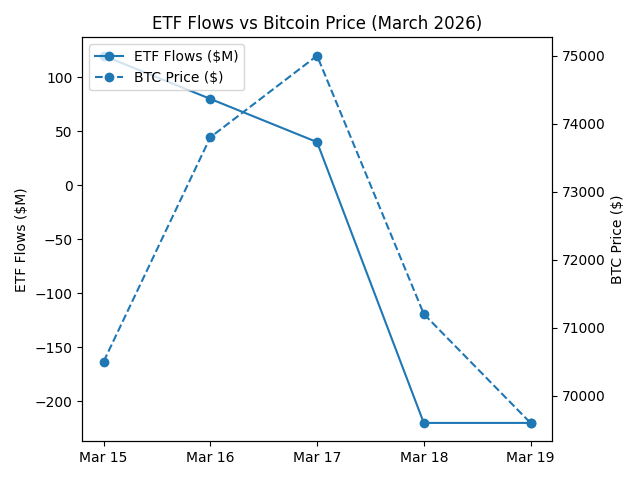
Figure 2 — Bitcoin price reacting to ETF inflows and outflows.
As illustrated in Figure 2, ETF outflows often coincide with short-term price weakness, reflecting institutional risk-off behavior.
Positioning: What Traders Should Understand
This is where most traders get it wrong.
Strong economic data is not always bullish for markets
Right now, crypto is trading as a liquidity-sensitive macro asset, not just a speculative asset.
That means:
- Good economic data → bearish (short-term)
- Weak economic data → bullish (liquidity easing expectations)
The Market Is in a Transition Phase
Bitcoin is currently transitioning into a macro-driven asset class, where price is influenced by:
- interest rates
- inflation expectations
- labor market data
- institutional flows
This shift explains why crypto is increasingly reacting to data like jobless claims.
Short-Term Outlook
Based on current conditions:
Bearish case
- Strong labor market persists
- Fed remains hawkish
- ETF outflows continue
- BTC tests lower support (~$67K–$69K)
Bullish case
- Market absorbs macro data
- ETF inflows resume
- BTC reclaims $70K+
Final Thoughts
The latest jobless claims data reinforces a key reality:
Crypto is no longer isolated from macroeconomics
Instead, it is becoming a liquidity-driven asset class, where economic data directly influences price through expectations around interest rates and capital flows.
Understanding this relationship is essential, because in today’s market:
Liquidity is the primary driver of price, not hype

1 Comment
Pingback: Crypto Weekly Summary: Bitcoin Holds $70K as Fed, Iran Tensions and ETF Outflows Drive Market Volatility – Dailycoinradar